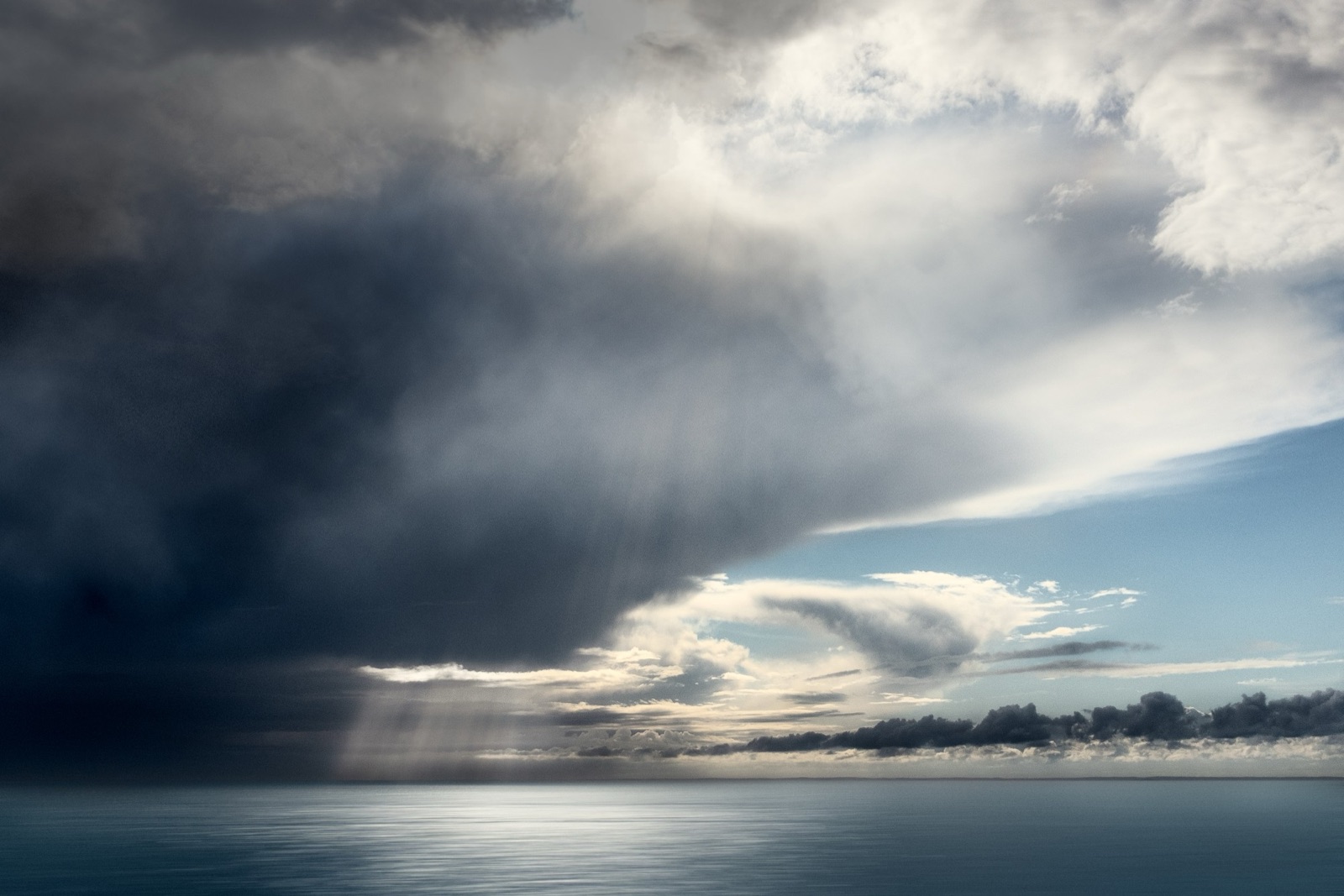
A Florida newspaper put my Baltic storm photo on top of a hurricane story. Nobody asked, nobody credited me, and a licence cost about a hundred euros.
I took the photo from the deck of a boat, somewhere between Turku and Stockholm, on a midsummer trip. Out there the archipelago is mostly small islands and sky. A storm front was coming in on one side while the other side was still blue, and for a moment the light fell through the gap onto the water. I called it “The storm is coming” and posted it on Instagram.
In December 2025 it turned up in Florida.
Le Soleil de la Floride, a French-language newspaper based there, ran a piece on the hurricane season, fewer storms but stronger ones, and needed a sky to put on top. They used mine. A Baltic sky over an Atlantic story, which is funny if you’re not me. They didn’t ask and they didn’t credit me. The image file on their server is named like a Mac screenshot, dated the day before the article came out. Next to the article there is an ad for a bank.
So somebody on that page is getting paid.
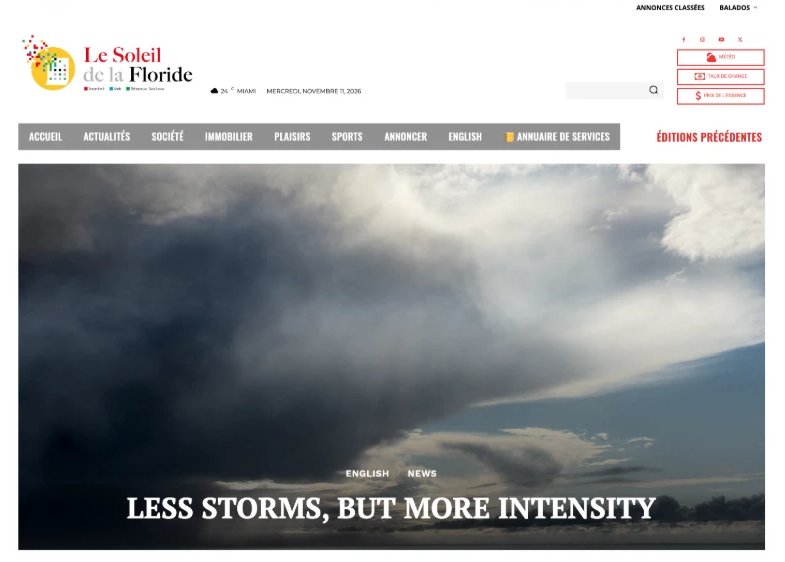
I found out through Pixsy, a service that scans the web for copies of my photos. I use it because this keeps happening. A prominent Italian newspaper did it with a different photo. Russian and Chinese outlets did it with others. None of them credited me and none of them ever took their copy down.
The polite term for this is “unauthorised use”, which sounds like a parking ticket. I call it stealing. Someone took a thing I made, did business with it, and paid nothing.
The offer I didn’t get
Photographers usually have a different argument. A publication wants a picture, has no budget, and offers a credit line: your name under the photo, think of the exposure. The answer to that has been the same for years. Credit isn’t payment. A credit tells the reader who made the picture. It goes on top of the fee, the way a byline goes on top of a journalist’s salary.
What gets me is that I didn’t even get the bad offer. Nobody wrote to say we like the photo, we can’t pay, would a credit do? That would at least have been a conversation. Taking it without asking skips the part where I exist.
A licence for that use would have cost about a hundred euros. The paper has been publishing since 1983 and sells advertising around its articles. A hundred euros was apparently too much, or more likely nobody thought about it at all, and I’m not sure which is worse.
A dropdown menu for justice
It took someone in Florida a few seconds to screenshot a photo made by a Frenchman living in Helsinki. Getting it back is slower. I filled in a takedown form, picked “United States of America” from a jurisdiction menu, and swore under penalty of perjury that the photo is mine, which is a strange thing to have to swear about your own work.
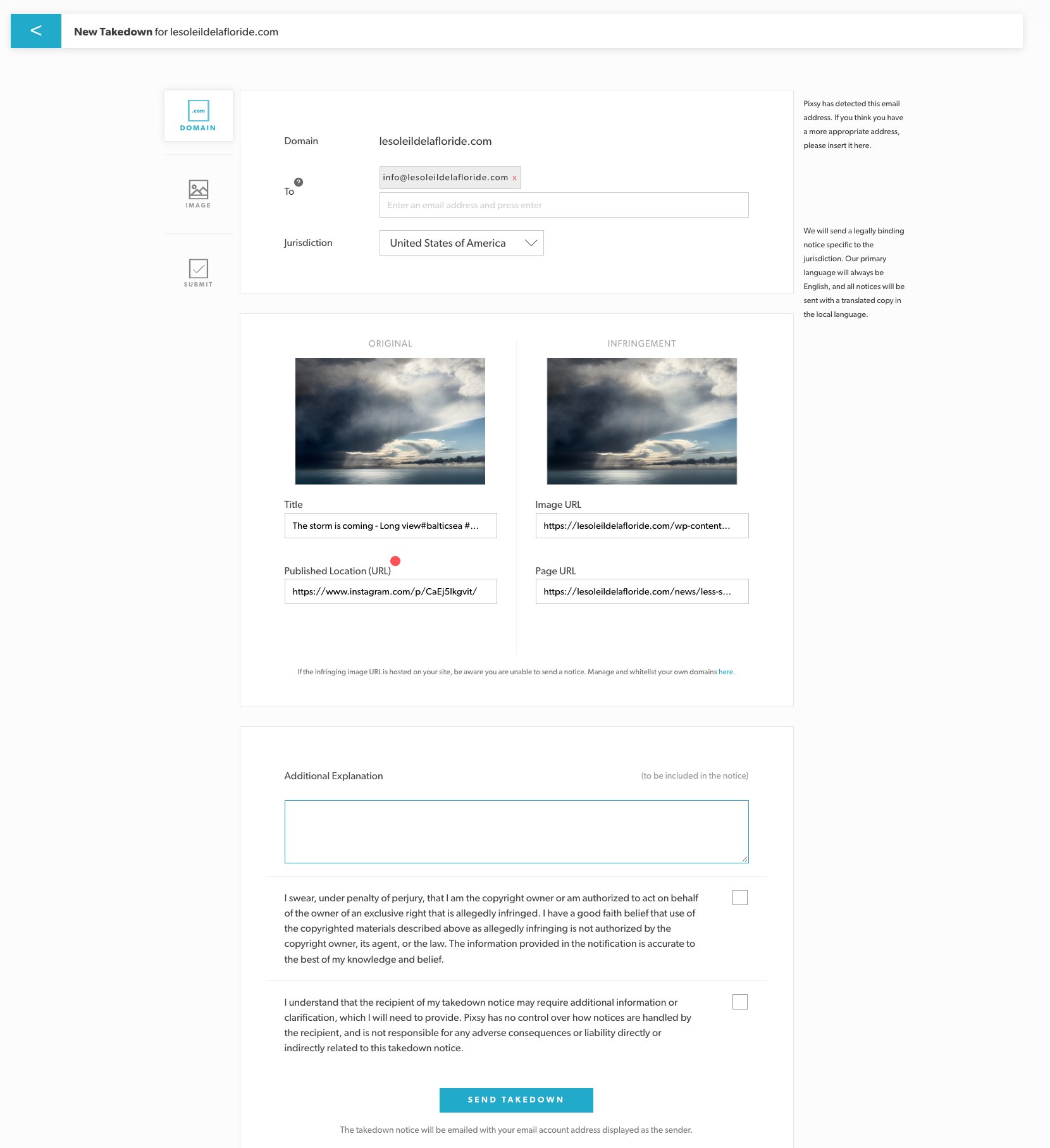
I also wrote to them directly, with two options: pay for the licence and keep the photo up with my name under it, or take it down.
I’m not optimistic. On paper my work is protected in Italy, Russia and China as well. Each time I contacted them and asked for the photo to come down. Not one of them replied, and those copies never came down. Ignoring me is their best strategy, and they know it. Nobody in their right mind takes a foreign newspaper to court over one photo, unless they have unlimited money for lawyers.
As I write this, the photo has been on their site for eleven months, on top of an article called “Less Storms, But More Intensity”. If they answer, I’ll update this page. The price hasn’t changed: a hundred euros, and my name under the photo.